
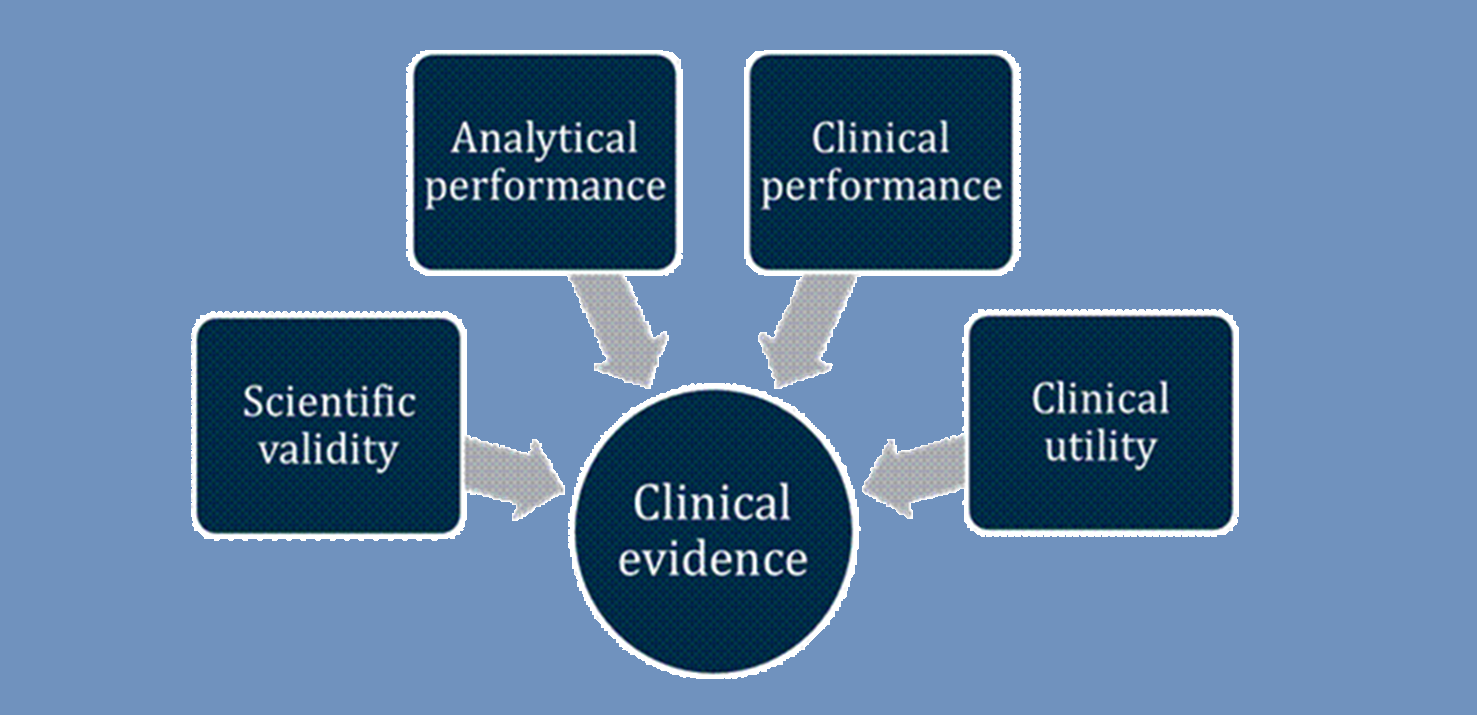
FDA 510(K) IVD Clinical Evidence
In vitro diagnostic (IVD) devices are used to perform tests on samples taken from the human body, such as blood or tissue, to help diagnose diseases or conditions. The clinical evidence for IVD devices is crucial to demonstrate their safety, efficacy, and performance.
Clinical evidence for IVD devices
The following are the components of clinical evidence for IVD devices
- Analytic validity
- Clinical Validity
- Clinical Validation Assay Types
If you’re a manufacturer or specification developer seeking approval for an IVD device, you’ll need to submit a 510k application to the FDA.
We specialize in assisting medical device manufacturers and specification developers in efficiently preparing and submitting their 510k files to the FDA, reducing the likelihood of receiving an initial “Refuse to Accept” (RTA)
Analytic validity
Analytic validity is crucial in clinical settings, as it determines the reliability of test results, which in turn affects clinical decision-making and patient care
- Demonstrates the device’s ability to meet established criteria for its intended purpose.
- Characteristics include imprecision, bias, analytical specificity, and analytical sensitivity.
- Imprecision is crucial for quantitative tests.
- Specificity minimizes the impact of bias-causing substances or conditions.
Matrix and Specimen Type Comparison
- Performance issues related to different specimen types (serum, plasma, urine).
- Matrix-related comparison issues include the use of surrogate samples and formulated matrices not identical to patients.
- Tests are necessary to detect these types and matrix-related comparison issues.
Accuracy (Comparison Study)
- Assesses the method’s success in determining measured value.
- Evaluates quantitative or qualitative determination.
Precision in Assays
- Variability in devices can be due to various factors.
- Evaluation of variability is crucial for qualitative assays and quantitative assays.
- Sources of variability include different days, operators, reagents, equipment, calibration, and measurement time.
Interval in Quantitative Assays
- Used to compare new IVD test results for individual patients.
- Also known as the “normal” range.
- Lower and upper limits of the reference interval often represent changes in the patient’s clinical management.
- “Expressed values” describe the expected percentage of test results in the target population.
Detection Capability Assessment
- Determining the lowest level of detection capability.
- Represented as Limit of Blank, Limit of Detection, or Limit of Quantitation.
Analytical Specificity
- Characterizes susceptibility to quantify measurements in interfering substances.
- Considers both endogenous and exogenous sources.
- Complies with applicable testing.
Reagents, Calibrators, & Quality Control Sample Stability
- Maintain performance characteristics over shelf-life.
- Store, transport, and use under manufacturer’s conditions.
- Prepare, use, and store according to manufacturer’s instructions.
Flex Studies
- Test assay design limits in various scenarios.
- Also known as Guard Band Studies or Assay Characterization.
Usability
- User-related factors can affect the accuracy, performance, and interpretation of IVDs.
- Factors include who collects the specimen, conducts the test, reads the output, and interprets the results.
- Tests for home use by individuals without training are evaluated under different conditions.
- IVDs for near-patient testing in clinics, emergency rooms, or physician office labs may be influenced by factors not typically in a highly controlled laboratory environment.
Specimen Collection and Stability
- Determine the method of specimen collection for the IVD device under investigation.
- Store collection vessels according to the manufacturer’s instructions.
- Review the method of collection for potential problems like sample hemolysis.
- Control sample transport to maintain stability.
- Maintain sample stability over relevant stored/transport conditions.
- Stability is related to chemical integrity, solvent evaporation, adsorption to containers, and non-homogeneous distribution.
Two approaches to assess sample stability:
- First approach: Measurand is considered stable for a stated period and under defined conditions when the average change in values between stored and fresh samples is less than a value, δ.
- Second approach: Analyte stability results obtained by comparing the concentration after storage to a reference value.
Linearity in Quantitative and Semi-Quantitative Tests
- Manufacturers determine linearity concentrations over the intended interval.
- Assess nonlinearity extent.
Quantitative Test Measuring Interval
- Defined in acceptable imprecision, linearity, and acceptable biases.
- Lower limit of quantitation (LLoQ): Lowest value, upper limit of quantitation (ULoQ): Upper limit of quantitation.
Carry-Over and Cross-Contamination Effects
- Undesired materials can compromise IVD performance.
- These include diluents, wash solutions, specimen parts, and reagents.
- Carry-over phenomena occur in manual, automated, and semi-automated IVD devices.
- These effects are critical to evaluate.
Clinical Validity
Clinical validity refers to the ability of a test or diagnostic tool to accurately and reliably predict a clinical outcome or the presence of a specific disease or condition. It assesses how well a genetic test, biomarker, or other diagnostic tool correlates with the presence, absence, or risk of a clinical condition in the patient population.
- Clinical validity is the ability of an IVD medical device to predict a clinically defined condition or health status in a specific population.
- For many analytes, clinical utility is well-established, requiring only accuracy determination on clinical samples.
- For novel analytes or combinations of analytes, the clinical validity and utility may not be established, impacting the study design.
- As scientific and medical knowledge develops, the initial established clinical validity for an analyte might change or expand.
- Clinical validity may include clinical sensitivity, specificity, positive predictive value and negative predictive value, and positive and negative likelihood ratios.
- The design of the clinical validity study depends on the intended use of the medical device, including test purpose, target population, specimen type, intended user, established analytical validity characteristics, expected clinical validity characteristics, novelty of the technology, and availability of an appropriate method to establish the true clinical status of the patient.
- Evaluation of continued clinical validity of an assay should be monitored post-market to reassess the benefits and risks of an IVD medical device.
Do you need an email containing full details within 2 minutes?
Clinical Validation Assay Types
- Qualitative, quantitative, semi-quantitative, tied, and Multi-Analyte Assays with Algorithmic Analyses (MAAA).
- Choice based on results provided to physicians/patients and possible valid interpretations.
Laboratory based IVD tests
Point of care IVD tests
This type of test is performed at, or near to, the point of patient care. This allows for a quicker diagnosis and speeds up the treatment decision-making process. In areas with little to no access to laboratory equipment and infrastructure, these point-of-care tests can help to improve patient care and reduce the cost of testing. Examples of this type of test include:
- Blood glucose self-monitoring systems
- COVID-19 tests
- Pregnancy tests
- Urinalysis test strips
IVD Instruments
- Clinical chemical analysis instruments,
- Immunochemical analysis instruments,
- Blood analysis instruments and
- Microbiological analysis instruments if according to the diagnostic methods and objects.
IVD Reagents
Working with I3CGLOBAL enables manufacturers to identify correct FDA IVD classifications and prepare the file more efficiently and effectively, ultimately speeding up the IVD 510k approval process.
Frequently Asked Questions
What is dual submission for IVD devices?
A dual submission for In Vitro Diagnostic (IVD) devices involves seeking both 510(k) clearance and a Clinical Laboratory Improvement Amendments (CLIA) waiver simultaneously. This approach can significantly expedite the approval process, but it requires careful planning and execution.
How IVD device are identified?
- The general description of the device and its intended use, user and environment.
- Description of the components (e.g. reagents, assay controls, calibrators, cassette, etc.) and where appropriate, a description of the reactive ingredients of relevant components (such as antibodies, antigens, nucleic acid primers, probes, etc.).
- General description of the assay method or instrument (electrical/electronic).
- General description of software/firmware and its role if the device integrates with it.
- Description of the instrument(s) required to perform the test.
- If applicable, labelled pictorial representation (diagrams, photos, drawings).