
Quick Contact

IVD CE Marking Services
IVD CE Marking is mandatory for manufacturers planning to market in vitro diagnostic devices in the European Union under IVDR (EU) 2017/746. The whole process is governed by the IVDR Regulation 2017/746, which replaced the older IVD Directive 98/79/EC.
I3CGLOBAL supports manufacturers with IVD CE Marking, including Technical Documentation, Performance Evaluation Reports (PER), ISO 13485 implementation, Risk Management, PMS, PMPF, and Notified Body coordination.
Need Support for IVD CE Marking & IVDR Compliance?
As a trusted IVD CE Marking service provider, I3CGLOBAL guides manufacturers through the complexities of the EU IVDR Regulation and supports faster access to the European market. I3CGLOBAL supports manufacturers with IVD CE Marking and IVDR CE certification services, including Technical Documentation, Performance Evaluation Reports (PER), ISO 13485 implementation, Risk Management, PMS/PMPF documentation, and Notified Body coordination.
✅ Class A, B, C & D IVD Devices
✅ Performance Evaluation Support
✅ IVDR Technical Documentation
✅ Global Regulatory Expertise
IVD CE Marking Process
The IVD CE Marking process under IVDR (EU) 2017/746 involves multiple regulatory and technical steps to demonstrate the safety, performance, and compliance of in vitro diagnostic devices before entering the European market. The following process flow diagram outlines the key stages involved in achieving IVD CE certification under the European IVDR framework.
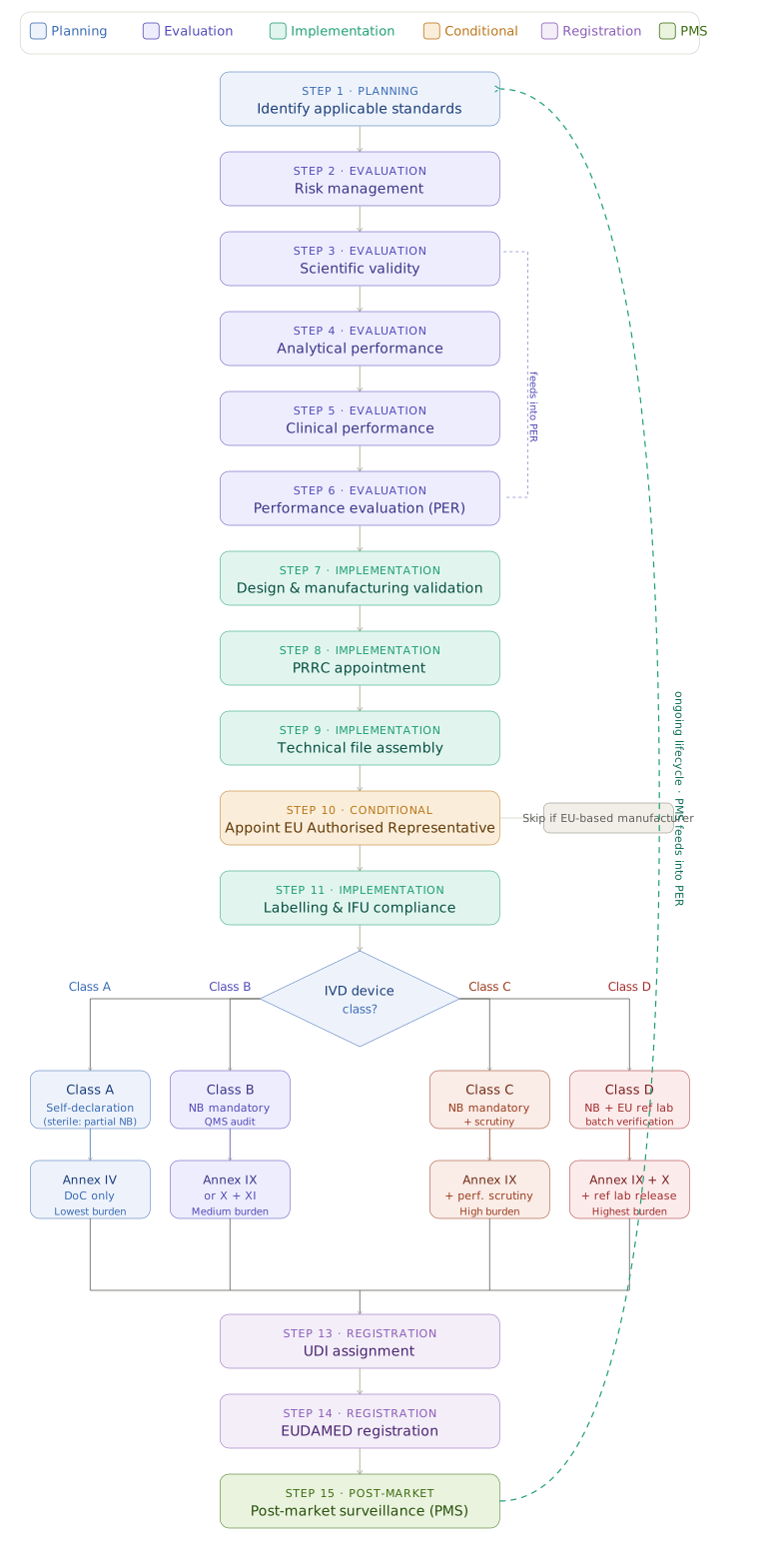
IVDR CE Marking Requirements
IVDR Device Classification (Class A, B, C, D)
In Vitro Diagnostic Regulation (IVDR) 2017/746, IVD devices are classified based on the level of risk. Class A devices are considered low risk, such as specimen containers. Class B devices have moderate risk. Class C devices are higher risk and usually include tests used to detect infectious diseases. Class D devices are the highest risk category and include tests used for blood screening, such as HIV tests.
Quality Management System
IVD manufacturers must establish a MDQMS to control the design, manufacturing, and quality of the device. IVDR insists manufactures to follow EN ISO 13485:2016 to meet the compliance with IVDR 2017/746
Technical Documentation
Manufacturers applying for IVD CE Marking must prepare technical documentation file (TDF) to show that the device meets the requirements of IVDR. The TDF includes device description, intended use, design and manufacturing information, risk management, performance evaluation, analytical performance, stability information, labeling, and Instructions for Use (IFU).
Performance Evaluation
IVD CE Marking applicants must study about performance evaluation to demonstrate that the device reads and answer correctly. This kind of study and evaluation normally includes scientific validity, analytical performance, and clinical performance.
Notified Body Assessment
All IVD CE Mark applicants must submit TDF (Class B, C and D only ) to NB for review and IVD CE Certification
EU Authorized Representative
Manufacturers located outside the European Union must appoint an Authorized EU Representative. This representative communicates with EU authorities and ensures the manufacturer follows the required regulations.
Declaration of Conformity (DoC)
IVD CE Marking applicants must prepare and signs the EU Declaration of Conformity in controlled format and confirms that the device complies with 2017/746 rules and attach into TDF
🔴 Important Point – Major Challenge in IVD CE Marking
One of the biggest challenges IVD manufacturers face under the under IVD CE Marking is meeting the strict requirements for performance evaluation and technical documentation, especially for Class C and Class D IVD devices. These devices require strong scientific evidence, detailed analytical and clinical performance data, and thorough review by a Notified Body.
Many manufacturers find it difficult to collect the required clinical data, prepare compliant documentation, and manage the complex review process. We also observed many manufactures do not have the proper know how and what way to conduct theses studies in real time.
As a result, expert regulatory consultants is often needed to successfully obtain IVD CE Marking .
Frequently Asked Questions
What is the difference between IVDD and IVDR?
IVDD (98/79/EC) was the previous European directive for IVD devices, whereas IVDR (EU) 2017/746 is the current regulation with significantly stricter requirements for Technical Documentation, Performance Evaluation, Risk Management, PMS/PMPF, and Notified Body involvement.
Is ISO 13485 mandatory for IVDR CE certification?
Although IVDR does not explicitly mandate ISO 13485 certification, implementing an EN ISO 13485 Quality Management System is strongly recommended and generally expected during Notified Body assessments for most IVD devices.
Does every IVD device require a Notified Body review?
No. Class A non-sterile IVD devices can be self-certified.
Class B, C, D, and sterile Class A devices generally require assessment by a Notified Body.
How long does IVD CE Marking take?
The timeline for IVD CE Marking depends on device classification, documentation readiness, testing requirements, and Notified Body review timelines. The process may typically take 12 to 16 months.
What are the IVDR classification categories?
Under IVDR, IVD devices are classified as below
- Class A
- Class B
- Class C
- Class D
The classification depends on the intended purpose and risk associated with the device.
What is an IVD Device?
The IVD device is a device or instrument or a software used to examine samples taken from the human body, such as blood, urine, or tissue, to provide information about health conditions. Few simple examples are the following
-
Blood glucose test kits
-
COVID-19 diagnostic tests
-
Pregnancy tests
-
PCR diagnostic kits
-
Hematology analyzers
Page updated on 18th May 2026 by Swathi Tummala